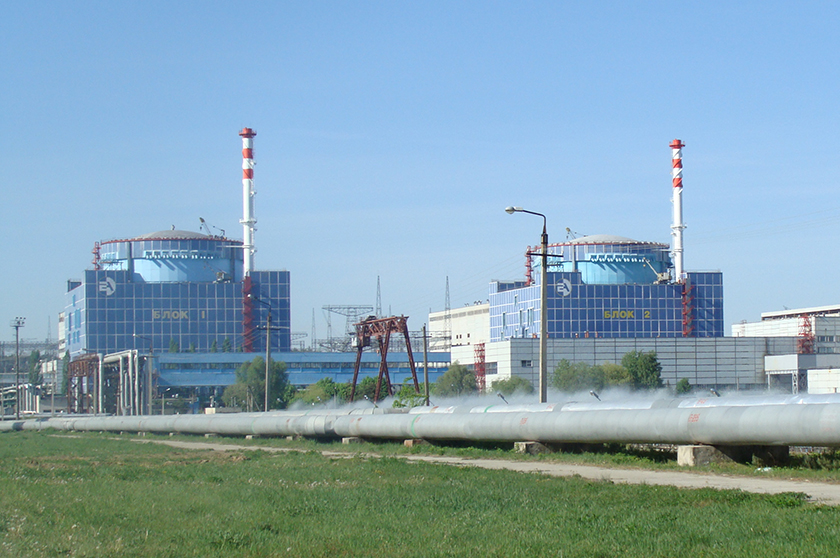
Ukraine inherited its energy system from the Soviet Union with characteristic features like a centralized system of energy and heat generation and supply, which was designed many years ago for high resilience and heavy industrial consumption with the capacity to work long hours under crisis conditions catering the needs of the big country, but with very little consideration for safety and none for energy efficiency.
However, its vulnerability became obvious already the beginning of the nineties. After gaining the independence in 1991, it became clear that the now separate Ukrainian energy system was relying on very long logistic chains routed all over former Soviet Union and was completely dependent on fossil fuel and materials supplied from russia (including fuel for nuclear power plants and processing of spent nuclear fuel).
Then when the economic and political crises of the nineties brought restrictions on the supply of energy carriers from Russia and therefore – severe challenges for the energy system and consumers in many areas of Ukraine got used to regular power outages by the end of the nineties.
That resulted in some measures to ensure the safety and reliability of the energy supply by reducing its dependence on russian imports, mostly due to the need to ensure the nuclear safety of the operation of the NPP and cooperation with international donors in this regard.
The full scale of the risks in relying on russian fossil fuel became apparent in Ukraine only after the annexation of Crimea, while Europe realized these risks even later – after russia finally weaponized its gas and oil supply systems once it launched a full-scale invasion of Ukraine.
From the very first days of the invasion, russia, ignoring all international agreements and safety precautions, seized two nuclear sites – the Chernobyl Exclusion Zone and the Zaporizhia Nuclear Power Plant, which have became actively used by the Russian military as sites for the military operations blackmailing the whole world with the possible consequences.
This illustrated that the risks of using nuclear energy are way too high in the modern world in the context of potential military conflicts, while the vulnerability of nuclear energy to the consequences of extreme natural phenomena has already been illustrated back in 2011 by the Fukushima nuclear disaster.
Further invasion of Ukraine resulting in its partial occupation and large-scale fire exchange illustrated another vulnerability of the existing energy supply system designed for centralized supply and long logistics chains use:
in a unified energy system (which usually is designed serves for more resilience of its separate parts), production and consumption sites can be very far from each other, the stability of electricity supply depends on the integrity of power supply lines, which can easily be compromised by military actions and interrupted logistics.
Basically, in the reality the damage was so extensive, that many people in Ukraine (especially in the occupied territories) survived last spring only thanks to private solar panels, while many people face very difficult winter under occupation and without access to electricity.
Even with the de-occupation the problems with access to electricity remain – upon retreat the occupying russian troops deliberately destroy the critical civil infrastructure to complicate the life of the de-occupied territories. Leaving Kherson, for example, they blew up the city’s electricity, water and heat supply facilities, as well as communication sites (mobile network and TV towers).
However, the most revealing illustration of the vulnerability of Ukraine’s centralized energy system is the ongoing deliberate attacks on civilian critical infrastructure throughout the territory of Ukraine, primarily energy infrastructure facilities by russian missiles.
According to Ukrainian energy distribution company – DTEK, the sites selection for missile attacks was carried out in consultation with energy specialists in order to cause the most damage and now these regular attacks since the beginning of October brought significant destruction of the Ukraine’s energy infrastructure, causing severe energy outages for consumers all over the country.
In order to stabilize the energy system, it became necessary to introduce emergency and scheduled stabilization cut-offs in many areas and cities, including Kyiv, while after the November 15 missile strikes across the country, many places were left without electricity, heating and water supply for several hours, and emergency and scheduled stabilization cut-offs still continue every day (sometimes several times a day).
Such electricity cut-offs bring serious financial risks due to damage to electrical appliances from unscheduled power cuts and reduced hours of productive work. However there are serious safety and security risks, including among other:
- increased fire hazard due to potential damage to electrical appliances from frequent power outages and the use of alternative sources of heat and light (gas burners, candles, wood stoves, gasoline generators, etc.);
- increased human health risks due to restricted access to safe drinking water and disruption of the sewage system functions, interruption of the proper conditions for food storage and processing;
- sharp deterioration of air quality due to the extensive use of diesel/gasoline generators by businesses during the power outages – in Kyiv one can literary smell the power outages when many businesses simultaneously turn on backup diesel/gasoline generators to continue functioning;
- increased unsafety on the roads and for pedestrian traffic with no street lights and traffic lights turned off.
The picture has become so illustrative that even the Deputy Minister of Energy of Ukraine for European Integration, Yaroslav Demchenkov, commenting on the destruction of the energy system of Ukraine in his article on Ukrainian Pravda, emphasized the need for reforming the entire system with increased safety and decentralization upgrade.
There are already examples of energy grid decentralization solutions in the modern world. For instance, the founder of the Tesla company, Elon Musk, believes that switching to decentralized generation by small domestic generation units using wind or solar installations in combination with storage units and connection to local and/or national grid for selling surplus generation will provide a more sustainable as well as resilient solution for the modern consumers.
Such a decentralized generation system can cover all energy needs of its owner and his neighbors without the need to connect to large generating capacities and install long power lines. Therefore, the company announced the transition to a new policy – selling solar installations only complete with a energy storage units of its own production for private use as well as communal facilities and businesses.
As part of this strategy, in 2021 Tesla and Miyakojima Mirai Energy Co installed more than 300 Tesla Powerwall batteries in private homes on the Japanese island of Miyakojima, connecting them to the local grid and creating a commercial virtual power plant powered by local private solar panels and wind turbines, providing the entire island with electricity in all weather conditions and selling energy to the grid during peak hours with good profit.
Such a decentralized system became a necessity because the island is regularly cut off the national grid during frequent extreme weather events such as typhoons. Tesla plans to install another 1,000 Powerwalls in Japan by the end of 2023 and expand this scheme to the entire prefecture of Okinawa.
However, with the daily power outages lasting several hours at the time, we also have to rethink our usual consumption patterns to reduce dependence on centralized energy supply, increase the safety of using alternative sources of heat and electricity, food storage and cooking, mobility and functioning of households and businesses in crisis conditions.
Many businesses already adapting to new conditions. For example, restaurants in Kyiv are already changing their business processes: they stopped on keeping stocks of various fresh food (like fresh meat or dairy products), reduced the number of dishes on the menu, and switched to seasonal and safer foods that are used immediately upon the delivery.
They are also developing new safety guidelines for cooking in conditions with no electricity, using on grills and in wood-burning stoves outdoors. And they also offer visitors blankets instead of turning on electrical appliances to raise the temperature in the room and candles to light the tables. Many of these measures are kept even during hours without power cuts.
Another experience is from the Kyiv paper mill plant, located in the city of Obukhiv near Kyiv. Here they were able to significantly reduce electricity consumption and at the same time keeping uninterrupted operation in new conditions. The plant is included in the list of the largest consumers of electricity in the Kyiv region and, according to the order of local authorities in November, had to reduce electricity consumption by an average of 40% per day.
The plant’s specialists introduced significant changes in the technological operation’s routine and started switching on the equipment at the less critical time for the power system. This made it possible to reduce energy use by up to 66% compared to average indicators, and during peak hours – to reduce consumption by 12.5-18.8%.
Such examples should be spread throughout the country and kept when possible even after the current crisis is resolved to become a new norm in future.
Olga Ignatenko, Information Center “Green Dossier”.
Sources:
- https://www.pravda.com.ua/news/2022/11/10/7375822/
- https://hub.kyivstar.ua/news/yak-pidtrymuvaty-robotu-biznes-proczesiv-bez-elektroenergiyi-pid-chas-blekautu
- https://bzh.life/ua/eda/12-zavedenij-kieva-gde-mozhno-porabotat-kogda-net-sveta-doma/
- https://rubryka.com/article/business-without-electricity
- https://www.epravda.com.ua/columns/2022/11/14/693771/
- https://building-tech.org/%D0%AD%D0%BD%D0%B5%D1%80%D0%B3%D0%B8%D1%8F/ylon-mask-khochet-sdelat-kazhdiy-dom-raspredelennoy-elektrostantsyey
- https://building-tech.org/%D0%AD%D0%BD%D0%B5%D1%80%D0%B3%D0%B8%D1%8F/tesla-postroyla-v-yaponyy-vyrtualnuyu-elektrostantsyyu
- https://texty.org.ua/articles/108217/biznes-i-blekaut-jak-vyzhyvajut-i-hotujutsja-zymuvaty-ukrayinski-pidpryyemtsi/
- Kyiv Cardboard and Paper Mill